Most people have heard of the Encyclopaedia Britannica, the oldest English-language encyclopedia in continuous publication (its first edition was printed in Edinburgh in 1768). Let's take a look at how it defines the term "lottery."

What is a lottery
A lottery is a procedure for distributing something — usually money or prizes — among a group of people, by lot or by chance. The type of lottery discussed here is a form of gambling in which many people buy chances, called lottery tickets, and the winning tickets are drawn from a pool consisting of all the tickets sold or offered for sale (a "sweepstake"), or from all or most of the possible permutations of the numbers or symbols printed on the tickets. The total value of the prizes is generally the amount remaining after expenses have been deducted from the pool — including the promoter's profit, promotional costs, taxes, and other revenues — although some lotteries fix the number and value of prizes in advance, so that the promoter's profit depends on how many tickets are sold. Most large lotteries offer a very large prize alongside many smaller ones. Lotteries are enormously popular as a way of raising money: they're simple to organize, easy to play, and hold broad public appeal.

The practice of deciding how to distribute property by lot dates back to deep antiquity. Among the dozens of biblical examples is one from the Old Testament (Numbers 26:55–56), where God instructs Moses to take a census of the people of Israel and divide the land among them by lot. Roman emperors such as Nero and Augustus used lotteries to give away property and slaves during Saturnalian feasts and other entertainments. A popular dinner entertainment in ancient Rome was the apophoreta (Greek for "that which is carried home"), in which the host distributed pieces of wood marked with symbols, and at the end of the evening held a drawing for prizes that guests took home with them. Modern-day analogues of this kind of lottery include the lotteries used for military conscription, commercial promotions in which property is distributed at random, and the selection of jury members from lists of registered voters. Under the strict definition of a gambling-type lottery, however, a consideration — property, work, or money — must be paid for a chance at a prize.
Early history of lotteries
The first European lotteries in the modern sense appeared in 15th-century Burgundy and Flanders, where towns sought to raise money to strengthen their defenses or aid the poor. Francis I of France authorized lotteries for private and public profit in several cities between 1520 and 1539. The first European public lottery to offer money prizes is thought to have been the ventura, run from 1476 in the Italian city-state of Modena under the auspices of the ruling Este family. But the lottery that became the true model for others was run in Genoa. It proved such a success — despite resistance from the Roman Catholic Church — that the practice quickly spread to other Italian cities and beyond.
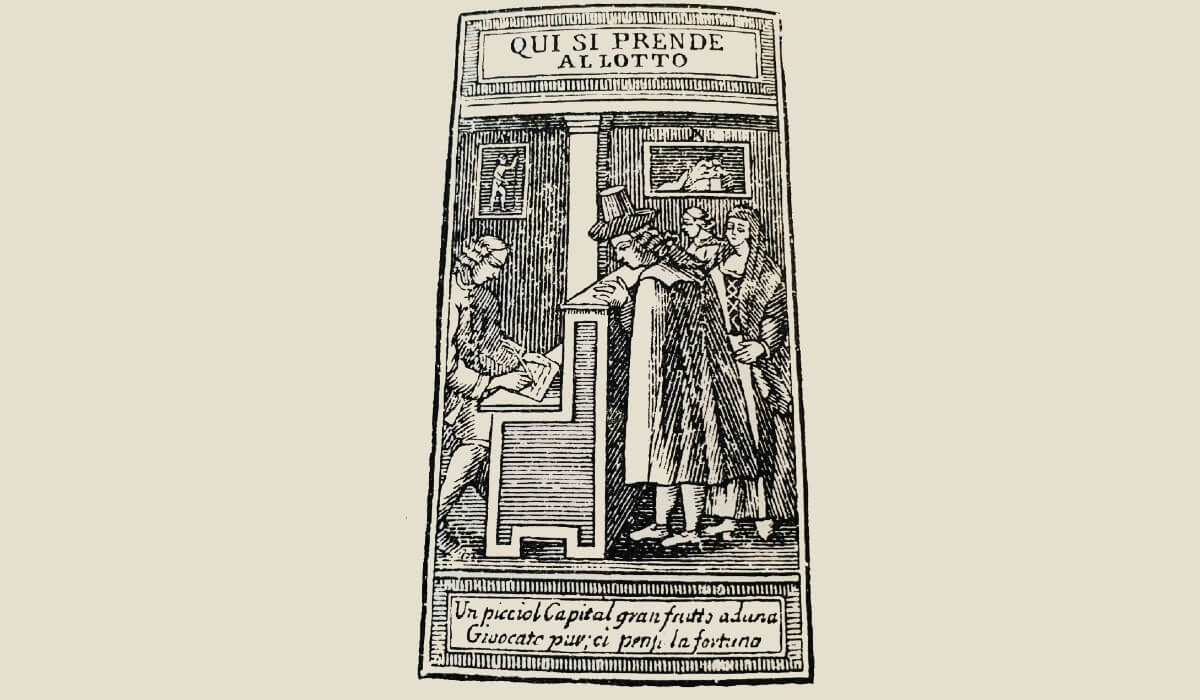
When Italy was unified, the first national lottery was created in 1863, with regular — weekly — drawings intended to provide revenue for the state. Lotto, the Italian national lottery, is considered the forerunner of such modern gambling games as policy, the numbers game, keno, bingo, and lotto itself.
Queen Elizabeth I established a general lottery in England in 1566 to raise money for repairing harbors and other public purposes. In 1612, the Virginia Company received permission from King James I to hold a lottery to help finance the Jamestown settlement in the New World. Although several of the company's lotteries failed to solve its desperate need for funds, and although entrepreneurs in some English towns complained about the trouble they caused, lotteries were nonetheless regarded as the "first and surest" means of raising money. Lotteries accounted for nearly half the company's annual income by 1621, when — after bitter internal disagreements within the company — the House of Commons finally banned them outright. In 1627, a series of lotteries was licensed to raise money for an aqueduct to supply London, and, apart from a ban from 1699 to 1709, lotteries continued to be run in England until 1826.
The 17th and 18th centuries in England gave rise to some notable problems associated with running lotteries. For most of this period, lotteries were the only form of organized gambling available to the public. They were intensively advertised through promotions such as torch-lit processions through the streets. Middlemen often managed to buy tickets below the standard price for resale at a hefty markup, and a form of side betting called "insurance" was popular — a small wager on whether or not a particular ticket would be drawn in the regular lottery. The state made no revenue from either of these practices, but dishonest private operators certainly did. There were also claims that lotteries encouraged mass gambling and that the drawings themselves were rigged. The abuses strengthened the arguments of those opposed to lotteries and weakened their defenders, but before lotteries were outlawed in 1826, the government and licensed promoters had used them to fully or partly finance projects such as the construction of the British Museum, bridge repairs, and numerous projects in the American colonies, including supplying a battery of cannons for the defense of Philadelphia and rebuilding Faneuil Hall in Boston.
In 1776, the Continental Congress voted to set up a lottery to try to raise funds for the American Revolution. That particular scheme was abandoned, but small state-run lotteries continued for the next 30 years, seen as mechanisms for raising "voluntary taxes" — and they helped build several American colleges, including Harvard, Dartmouth, Yale, King's College (now Columbia), William and Mary, Union, and Brown.

Privately organized lotteries were also common in England and the United States as a way of selling goods or property for more than could be obtained through an ordinary sale. By 1832, lotteries had become extremely popular; Boston's "Mercantile Journal" reported that 420 lotteries had been held in eight states in the previous year alone.
Abuses by private promoters continued, however, and opposition voices grew louder again. In 1827, postmasters and their assistants were banned from selling lottery tickets. Most states began passing anti-lottery laws. In 1868, Congress made it illegal to use the mail for letters or circulars relating to lotteries "or other similar enterprises" under any pretext. By 1878, the Supreme Court had concluded that lotteries had a "demoralizing influence on the people."
Postal restrictions didn't wipe out lotteries overnight; the most successful lottery in the United States was run in Louisiana starting in 1869 and continued uninterrupted for 25 years. Agents for the Louisiana Lottery were stationed in every US city: total monthly sales reached $2,000,000 at their peak; monthly drawings paid out prizes of up to $250,000, while twice-yearly prizes could reach $600,000. In 1890, President Benjamin Harrison and Congress agreed to condemn lotteries as "fraudulent and demoralizing agencies" and banned the interstate transport of lottery tickets. The Louisiana Lottery, the last state-sanctioned lottery in the US until 1963, was shut down — but not before it had earned its (private) promoters huge profits and a reputation for bribery and corruption.
The history of lotteries in several European countries followed a path fairly similar to that of England and the US — though not to Italy's. In France, lotteries grew steadily more popular after being introduced by Francis I in the 1500s. Their broad appeal held up until the 17th century, when Louis XIV and several members of his court managed to win the top prizes in the lottery — an event that raised suspicion and led the king to return the money for redistribution. French lotteries were abolished in 1836. Nearly a century later, in 1933, a new National Lottery was created; it closed shortly before World War II but later reopened.
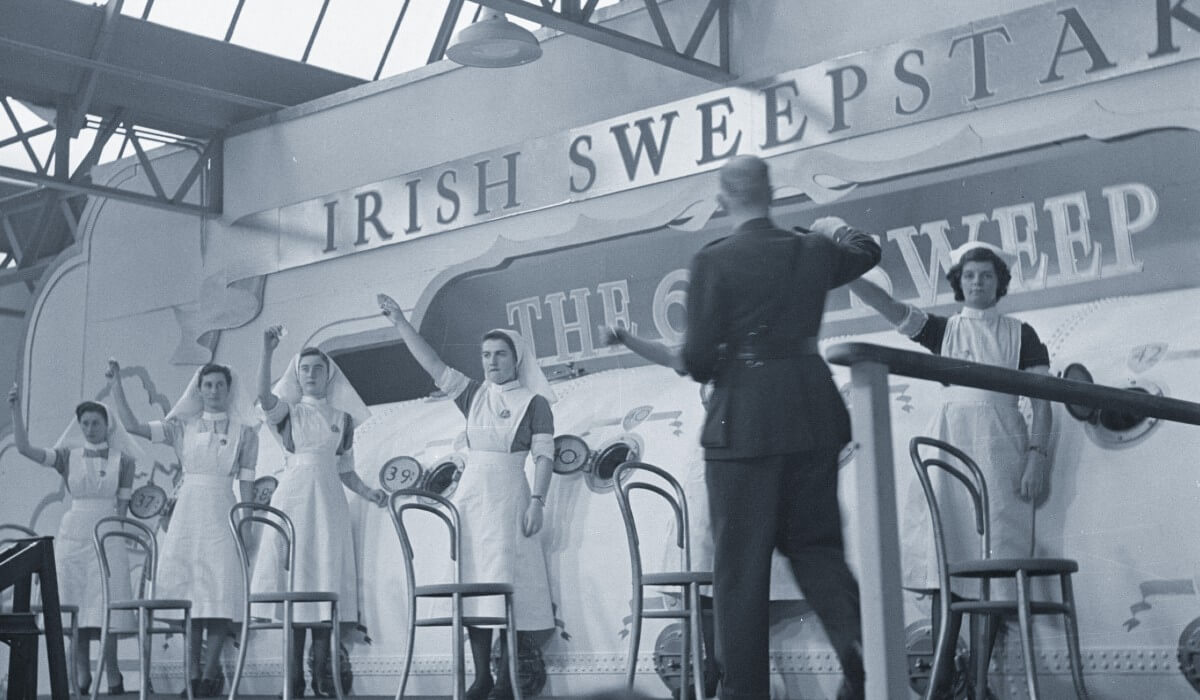
In the 1930s, the Irish Hospitals' Sweepstakes was established, marking the start of the highly organized lotteries of the 20th century. Even so, the sweepstake scheme wasn't all that different from the state lotteries of 19th-century England or Europe.
Rules of modern lotteries
The basic elements of lotteries are usually fairly simple. First, there must be some way of recording the identity of the participants, the amount staked by each, and the number(s) or other symbols on which money is being staked. A player may write their name on a ticket that is deposited with the lottery organization for later shuffling and possible selection in the drawing. Or a player may buy a numbered receipt, knowing that this number will be entered into the pool of numbers, and it is up to the player to find out whether their ticket is among the winners. Many modern lotteries are run using computers, which record each player's chosen number(s) or a randomly generated number. As a rule, it's up to players to later determine whether they hold a winning ticket, although sometimes buyers' identities are recorded and payment for winning tickets can be transferred directly to players' bank accounts. Another procedure requires the player to tell a lottery representative what number — usually up to three digits — they're guessing will be drawn, with the representative trusted to return later with the prize if one is won. This was the standard procedure in the numbers game, which was popular for several decades in most major US cities. Under US state laws, the numbers game is defined as an illegal lottery. Bolita, a lottery similar to policy, is run in Puerto Rico, and in the US among Cuban and Puerto Rican communities. In it, a single numbered ball is drawn from a bag of balls numbered from 1 to 100.
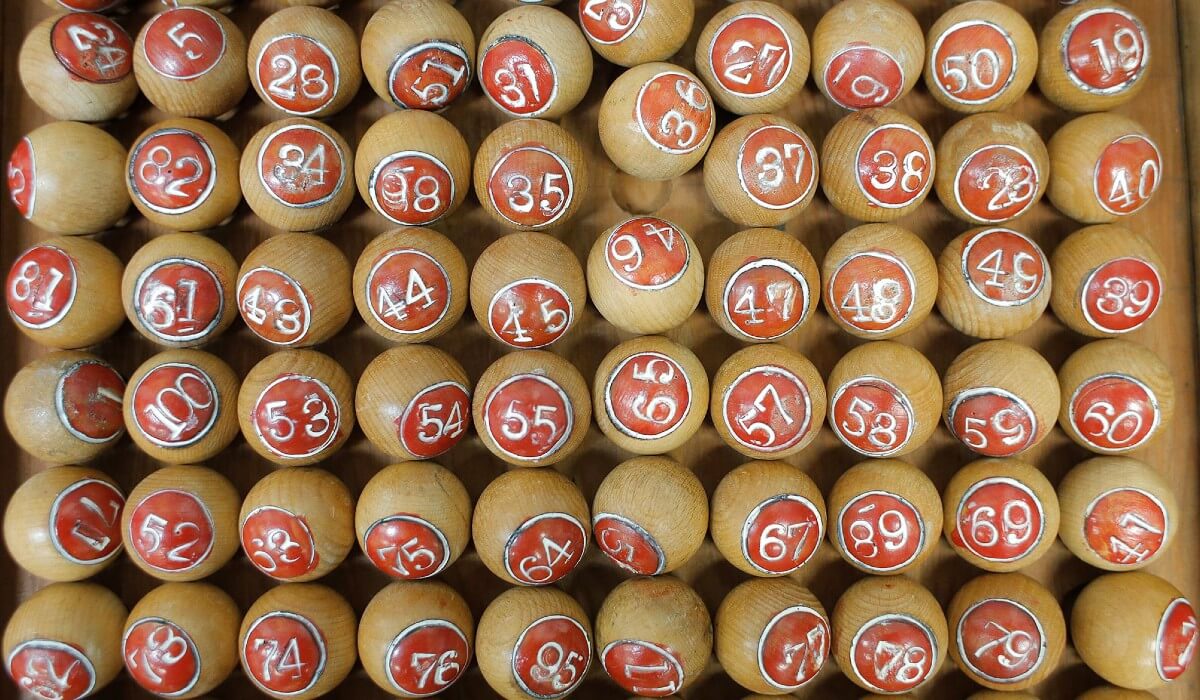
The second element common to all lotteries is the drawing itself — the procedure that determines the winning numbers or symbols. It can take the form of a pool or collection of tickets, or their counterfoils, from which the winners are drawn. First, the tickets must be thoroughly mixed by some mechanical method, such as shaking or tossing; this randomizing procedure is meant to ensure that chance, and chance alone, decides the winners. Computers are increasingly used for this purpose, since they can store information on huge numbers of tickets and generate random winning numbers. In lotteries where participants choose their own numbers, it's possible that several tickets are sold bearing the correct combination of winning numbers — in which case the prize is split among the winners — or, alternatively, that no such ticket was sold at all. The usual procedure in the latter case is to roll the prize over into the next drawing (the so-called jackpot, or rollover), increasing the size of the top prize or prizes. In this way, extremely large sums can eventually be paid out. A modern-day example of this kind of lottery is the American Powerball lottery.
Organizers of state, and especially large-scale, lotteries may take the opportunity to make the drawing and shuffling process as colorful and dramatic as possible. Drawings held by the Irish Hospitals' Sweepstakes, before it ceased operations in 1987, were sometimes combined with horse racing. That lottery held two drawings: one to determine the winning numbers, and another to match those numbers to the names of horses entered in major races; the individual horses' performance then determined the final order in which prizes were distributed.
A third element common to all lotteries is some mechanism for collecting and pooling all the money staked as bets. This is usually done through a hierarchy of sales agents who pass the money paid for tickets up through the organization until it ends up in the "bank." A practice common to many national lotteries is dividing tickets into fractions, typically tenths. Each fraction, when sold separately, costs slightly more than its share of the full ticket's total value. Many agents then buy whole tickets — effectively at a markup or discount — to sell on the street, where buyers can place relatively small bets on fractional tickets. Large-scale lotteries either use a computer system to track purchases and print tickets at retail outlets, or ideally use the regular postal system to transmit information and transport tickets and stakes. In the US and some other countries, however, postal regulations prohibit using the mail for this purpose. Postal restrictions also extend to the international mailing of lottery materials. Even though postal services are careful about enforcement, plenty of smuggling and other violations of interstate and international rules clearly still occur.
A fourth requirement is a set of rules governing the frequency and size of prizes. The costs of organizing and promoting lotteries must be deducted from the pool, and a certain percentage typically goes to the state or sponsor as revenue and profit. Of what remains for winners, a decision must be made about the balance between a few large prizes and many small ones. Prospective players are drawn to lotteries offering very large prizes, as shown by the fact that ticket sales jump sharply for major drawings — but in some cultures, players also want a chance at smaller prizes (which are typically staked again in the next round). Lottery experts disagree on which approach is better both for players' welfare and for a lottery's economic success. The share of the pool returned to players usually runs between 40 and 60 percent. In the numbers game, winners are typically returned just over 50 percent.
The spread of modern lotteries
State-run or licensed large-scale private lotteries are common across many countries in Africa and the Middle East, in nearly every country in Europe and Latin America, in Australia, Japan, and a number of countries on the Asian mainland. That list also includes most US states. Communist countries spent several decades trying to reject state-run gambling as decadent and anti-Marxist, but ultimately it was only privately organized gambling that remained out of favor.
Australia, however, is often called the true birthplace of the state lottery. New South Wales, where lotteries date back to 1849, runs one of the largest, selling over a million tickets a week; it has financed, among other things, the striking Sydney Opera House. New South Wales also gives away houses, cars, and other prizes on a scale unmatched elsewhere in the world.

"Classic" lotteries, with numbers or symbols preprinted on the tickets, steadily lost ground during the second half of the 20th century to lotteries where players choose their own numbers (from an approved pool) — chiefly lotto, which by the early 21st century had become the world's leading form of lottery, with total annual sales exceeding $150 billion. Because of their contentious nature, national lotteries (like many other forms of gambling) fall outside the scope of European Union law, which otherwise allows the free movement of goods and services across national borders. But internet lotteries represent a growing challenge to that policy; the first such game offered to the general public was Interlotto, launched in 1995 in Liechtenstein (rebranded PLUS Lotto in 1997). New technology has also enabled other formats of lottery, such as scratch cards ("instant lotteries") and video lottery terminals.